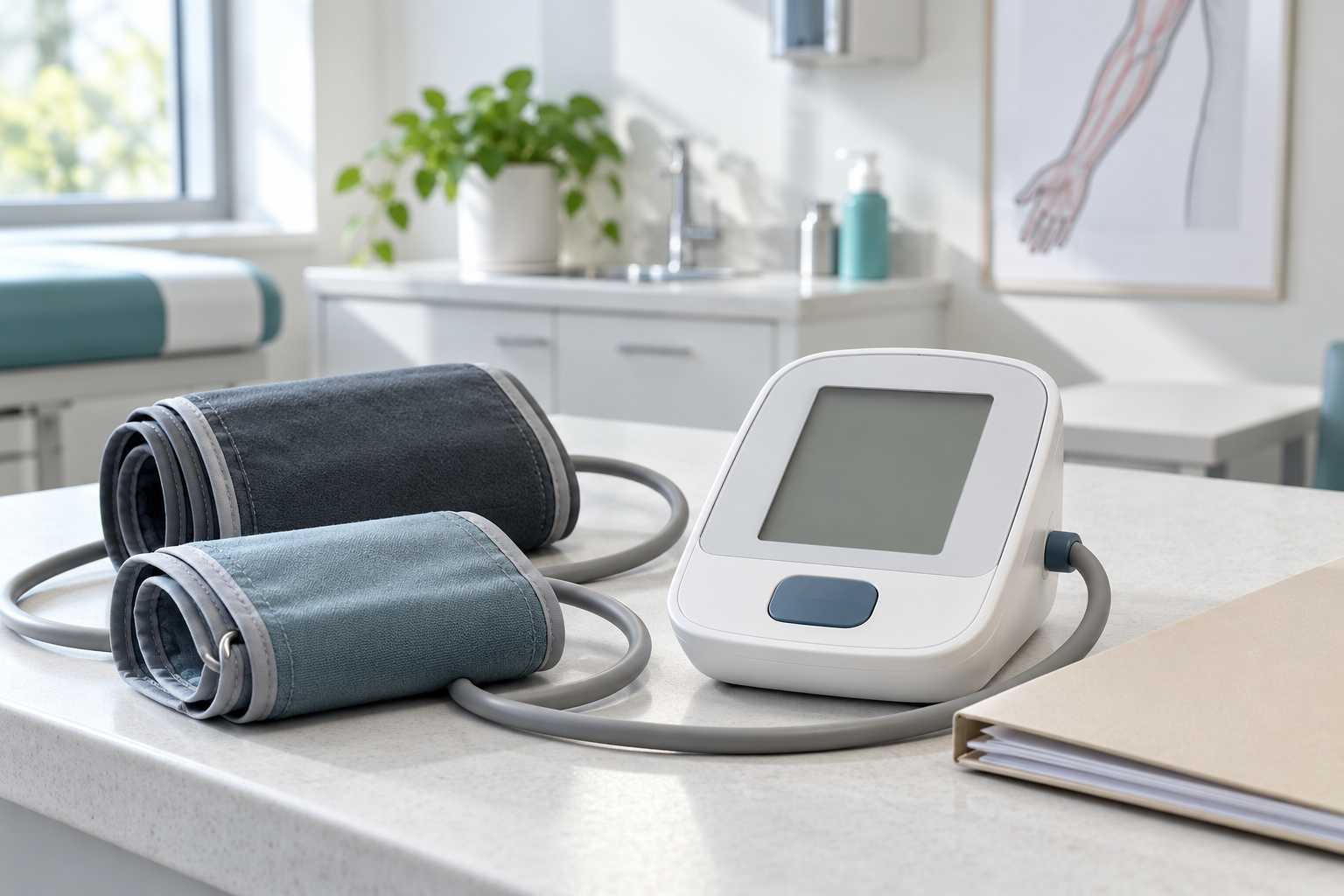
A quotation that says “digital blood pressure monitor” leaves important questions unanswered. Which model is being offered? Which cuff comes with it? What evidence will the hospital’s technical team review? A clear purchase file makes those questions visible before an order is agreed.
In its World Hypertension Day statement of 17 May 2026, WHO South-East Asia identified access to clinically validated blood pressure devices as a continuing concern. This is a regional statement, not a statistic about Pakistan. For hospital buyers here, it is a useful prompt to examine the evidence attached to an offer.
Start with the offered configuration
Give each proposed device a clear entry in the evaluation file. Record the manufacturer, full model reference, intended setting and the cuff configuration offered. Keep the corresponding quotation and product documentation together. If a supplier changes the model during clarification, update the entry and ask the reviewing team to check the replacement information.
Descriptions such as “latest model” or “premium quality” can leave two bidders answering different questions. A named configuration gives the hospital, supplier and receiving team a common reference.
Ask what the evidence actually covers
Request the validation reference and pass it to the hospital’s clinical or biomedical team. Ask them to confirm whether it applies to the proposed model, cuff and intended use. Where another model name is cited, ask for the documented relationship rather than treating a similar name or appearance as sufficient.
STRIDE BP’s listing principles explain that equivalent and identical models follow a documented review process. The practical point is to preserve the link between the offered item and its supporting evidence. This article does not assess or recommend an individual monitor.
Include the support questions
Before finalising the order, ask who will supply replacement cuffs and accessories, which manuals are included, and how maintenance support will be arranged. Put the agreed delivery terms and the contact responsible for unresolved questions in the same file. These are Elysian’s suggested procurement discussion points; the hospital determines its technical requirements and acceptance process.
WHO’s technical guidance published on 20 April 2020 covers procurement alongside device characteristics, accessories and maintenance. It is a foundational reference, not a new product announcement or evidence of local approval.
Make clarification part of the process
A short open-questions list can be more useful than a folder of unrelated brochures. Record the question, the person responsible and the agreed response before closing the evaluation. Patient care remains the purpose of the work, while product selection and clinical use remain with the responsible professionals.
Elysian Biomedical LLP imports and distributes surgical disposables and medical devices for public and private hospitals throughout Pakistan. Learn about our hospital procurement approach or browse our care-area catalogue. This educational article makes no claim about a particular monitor’s availability, regulatory status or validation.
Sources reviewed 22 October 2026. The STRIDE BP principles page is undated. Illustrative artwork does not depict an Elysian facility or a specific supplied device.