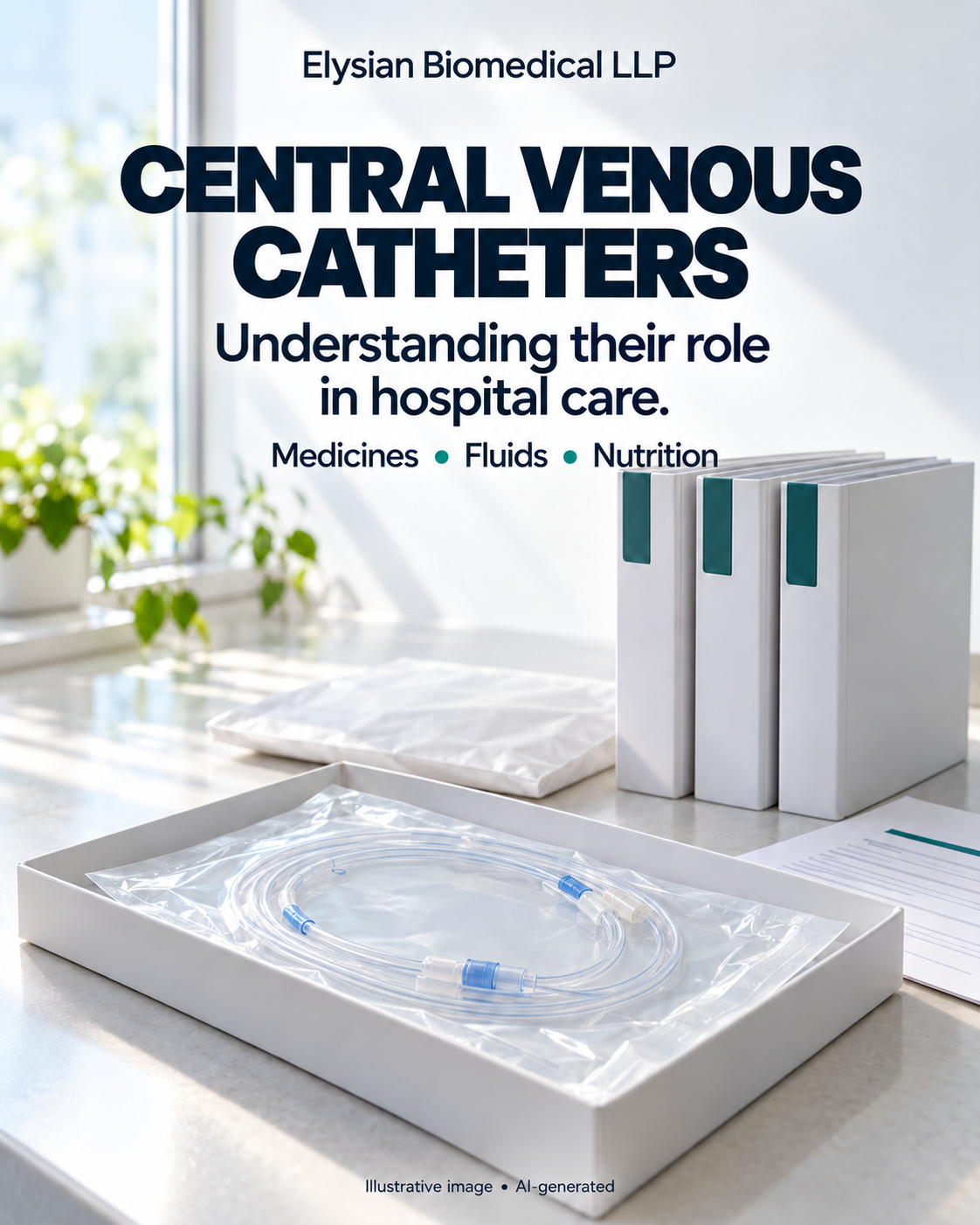
Central venous catheters (CVCs), often called central lines, give healthcare teams access to a large vein for medicines, fluids or nutrition. They may also be used for certain tests, including blood sampling when appropriate. Understanding these roles gives a product name meaning: it connects the device with the care a patient may need.
What makes a CVC different?
A CVC is a catheter, or tube, that reaches a major vein near the heart. It differs from a short peripheral intravenous (IV) line, such as one used in the hand or arm. The US Centers for Disease Control and Prevention describes these differences in its central-line overview, dated 12 June 2025, and notes that central lines are commonly used in intensive care units.
The term describes an access route, rather than a treatment on its own. The healthcare team chooses the type of access that fits the person’s care. Knowing the general purpose of a CVC does not determine which device an individual patient needs.
Medicines, fluids, nutrition and selected tests
A central line can provide a route for prescribed medicines. It can also deliver fluids or nutrition as part of a clinical care plan. These are distinct uses: the presence of a CVC does not tell an observer which treatment is being given.
Certain tests or blood samples may also use central venous access when appropriate. Northampton General Hospital NHS Trust’s patient guide describes medication, nutrition, fluid and blood-sampling uses. The page has no visible publication date; we accessed it on 25 October 2026. These general examples explain the category and are not recommendations for an individual patient.
A device supported by trained teams
Selection and care belong with qualified healthcare professionals. The WHO CVC guideline, published 28 May 2026, addresses clinicians, infection prevention professionals and health system stakeholders. Its overview covers the stages of CVC management and highlights healthcare-worker education and training. This article draws on that broad context without giving instructions for placing or managing a line.
Why this matters in Pakistan’s hospital sector
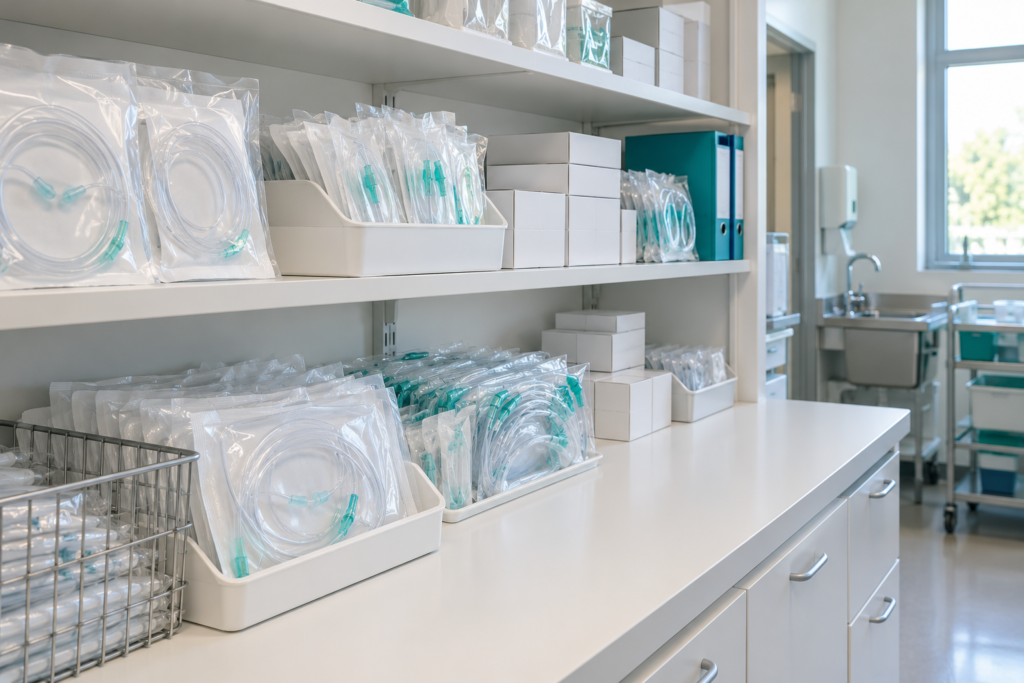
Elysian Biomedical LLP imports and distributes surgical disposables and medical devices across Pakistan, with CVC/CVP lines among the product families we supply. We believe useful product education should begin with what a device does and the professional team responsible for its use. That shared vocabulary helps colleagues outside direct clinical care understand the products discussed around them, while respecting the treating team’s decisions.
Our Medical Insights articles explain confirmed portfolio categories in plain English. A general explanation is separate from an exact model’s instructions, suitability or availability, which require the relevant product information and professional review.
Educational overview. Sources reviewed 25 October 2026: CDC, 12 June 2025; Northampton General Hospital NHS Trust, undated; WHO, 28 May 2026.