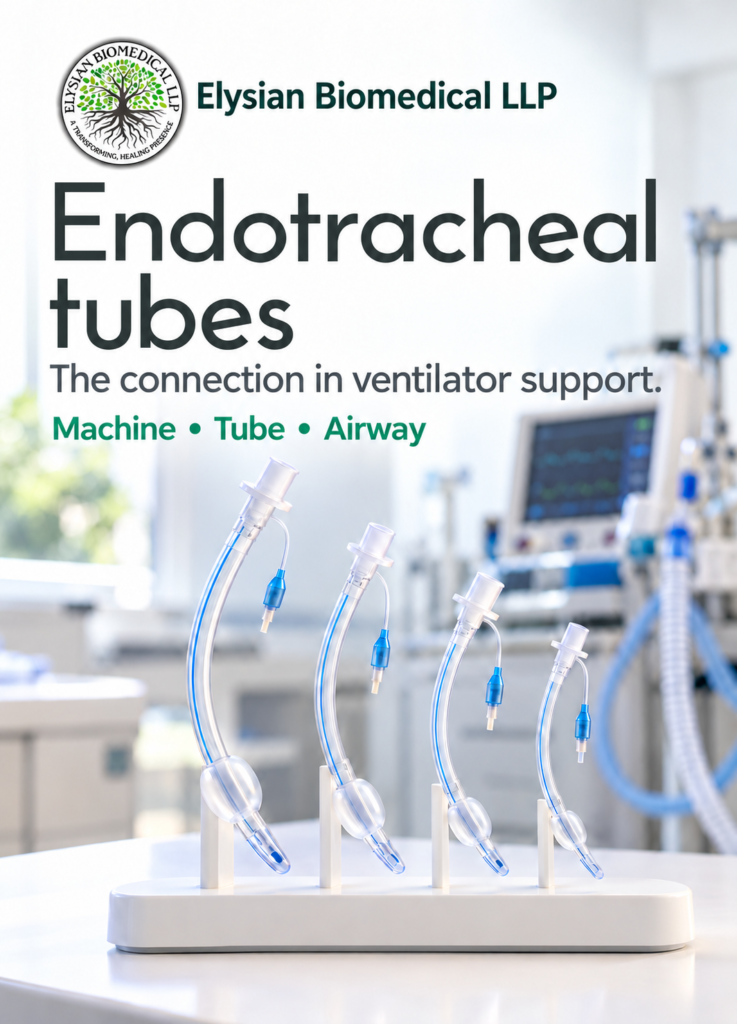

A respiratory supply enquiry can name the main device clearly while leaving the supporting items scattered across separate conversations. Tubing, interfaces, replacement parts and the documents needed for review deserve an explicit place in the purchase plan.
WHO–UNICEF’s 2019 guidance on oxygen therapy devices addresses procurement alongside equipment, accessories and maintenance. WHO’s facility oxygen-system specifications, published on 31 December 2024, cover sources, storage and distribution. These are established references, not a new device announcement.
The following is Elysian Biomedical LLP’s procurement perspective for public and private hospitals in Pakistan. It is intended to help organise an enquiry; the hospital’s clinical, biomedical and engineering teams determine the requirements.
Give supporting items their own line
Ask the reviewing team for a consolidated item list. Identify the main equipment separately from the accessories, consumables and replacement parts requested with it. For each line, record the description, manufacturer reference where specified, quantity, packaging unit and the supporting document expected.
This makes a useful question visible: does the quoted price cover the whole agreed request, or only its main item? Resolve additions and exclusions in writing so that the purchase order and receiving checklist describe the same scope.
Make compatibility a documented review
A familiar appearance is not a compatibility record. Ask for the information the hospital needs to review the proposed accessories against its existing equipment and intended setting. Keep the relevant references, connection details and manufacturer instructions with the offer.
The WHO–UNICEF guidance notes that procurement specifications need adaptation to the local setting. Elysian’s practical suggestion is to give any unresolved compatibility question a named technical reviewer before the order is agreed. This article does not specify clinical configurations, oxygen flow settings or a method of connecting equipment.
Plan replenishment as well as delivery
Keep the first delivery and subsequent supply arrangements distinct. Ask the hospital to define its replenishment requirements using its own approved stock and consumption records. Request the supplier’s proposed lead times, pack quantities and terms for the items on that list.
For applicable equipment, clarify which manuals, spare-parts information and maintenance arrangements are included. Record what the supplier has confirmed, what the hospital will manage and which points remain open. Do not treat an initial accessory bundle as evidence of continuing availability.
Close the enquiry with a shared record
A short schedule can bring the discussion together: item and reference; required quantity; reviewing team; documents received; replenishment arrangement; outstanding question. Keep revisions dated so that a changed accessory or delivery term reaches the people who will approve and receive the order.
Elysian Biomedical LLP imports and distributes surgical disposables and medical devices throughout Pakistan. Our hospital procurement page explains the information useful for an institutional enquiry. Our care-area catalogue includes anesthesia and respiratory categories, with exact products and supply terms confirmed through the relevant documentation.
Sources reviewed 23 October 2026. WHO lists the 2019 guidance page as 14 January 2019. This is procurement education, not a claim of oxygen-system installation capability, current stock, product approval or clinical suitability. Any accompanying AI illustration represents a generic setting.