A request for “medical gloves” can leave several purchasing questions unanswered. Which category has the hospital specified? What material and sizes are required? Does the quantity refer to individual gloves, pairs or boxes? A clear enquiry makes those details visible before quotations are compared.
The following is Elysian Biomedical LLP’s procurement perspective for public and private hospitals in Pakistan. The hospital’s clinical and infection-prevention teams determine the appropriate requirements; purchasing teams can then carry those requirements consistently into the tender, quotation and order.
Write a complete item description
Give each requested glove item a separate line. Ask the responsible hospital team to confirm the category, such as examination or surgical, along with the required material, size, powder status and whether a sterile or non-sterile presentation is specified. Record the manufacturer and product reference when an exact item has been requested.
Keep unresolved fields visible. If a supplier proposes a different material, size range or presentation, return that difference to the hospital’s authorised reviewer. A familiar colour, product photograph or broad family name does not answer the specification questions.
Make the purchasing unit explicit
Quantity and price need the same unit. State whether an enquiry is expressed in individual gloves, pairs, boxes or cartons, and ask the supplier to identify the contents of each quoted pack. Keep the required size quantities separate so that a total order does not hide a missing size.
Before issuing the order, compare the requested description with the offered description and agreed packaging. This is a practical way to spot an unanswered detail while the enquiry can still be clarified.
Match documents to the offered product
UNICEF’s Technical Requirements for Medical Devices, October 2023 edition, includes product datasheets, packaging information and manufacturer instructions within its documentation requirements. These are requirements for UNICEF procurement, not a statement of Pakistani law or proof that a product has local approval.
Our practical suggestion is to ask which documents support the exact offered reference. Keep the datasheet and relevant packaging information beside the quotation. Have the hospital’s designated reviewers identify the evidence they require, including any applicable tender, regulatory or sterile-product documentation. Record outstanding questions and the person responsible for resolving them.
Keep procurement connected to hospital policy
In its 5 May 2025 reminder, WHO emphasised that gloves do not replace hand hygiene. A glove purchase should therefore sit within the hospital’s established infection-prevention arrangements. This article provides purchasing questions, not instructions on when or how to use gloves.
Elysian Biomedical LLP imports and distributes surgical disposables and medical devices throughout Pakistan. Patient care is our priority. For an institutional enquiry, our hospital procurement page explains the information useful for discussing requirements and supporting documents.
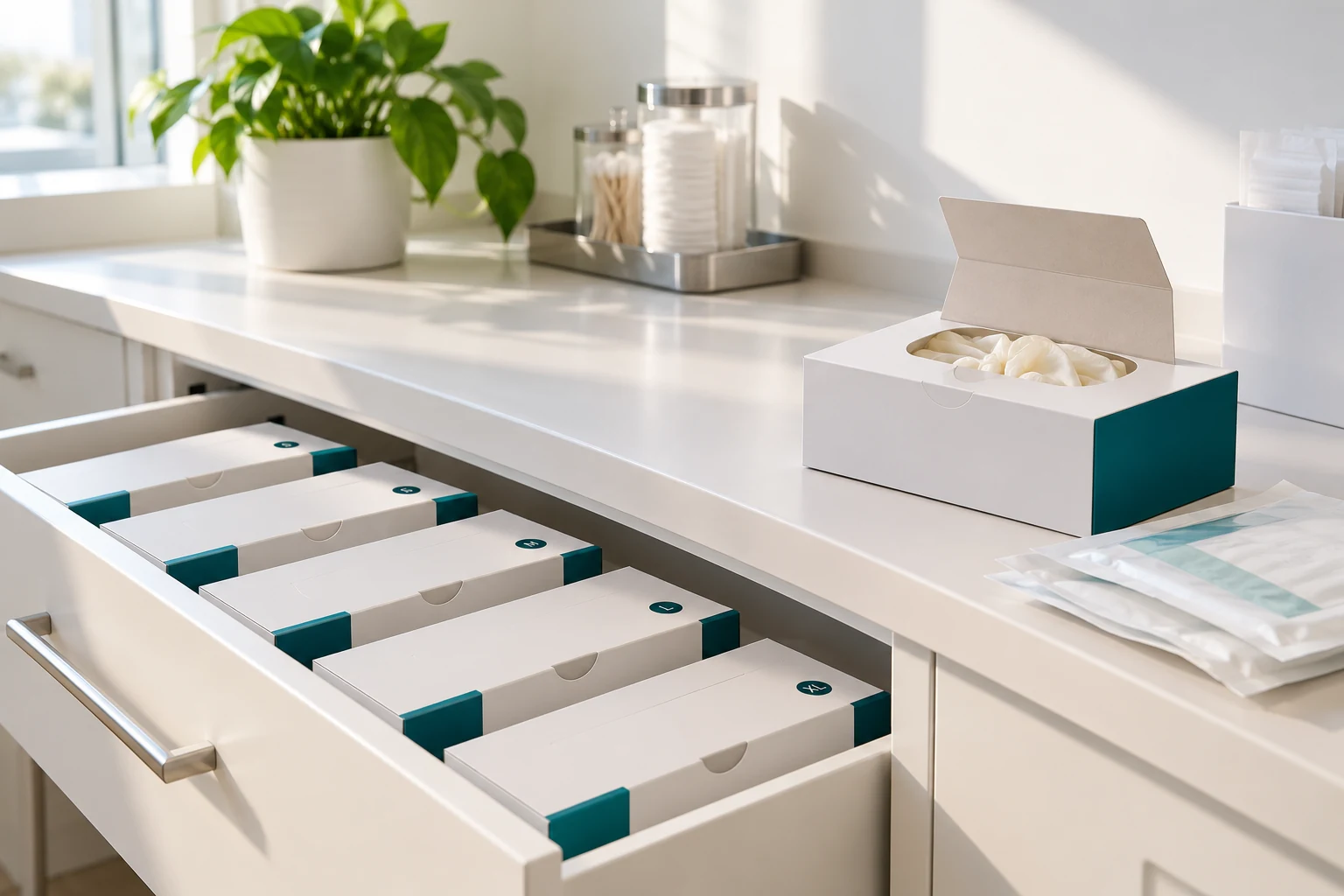
Sources reviewed 24 October 2026. This is established procurement education; it does not announce a new product, current stock or product approval. Any accompanying AI illustration represents a generic supply setting.